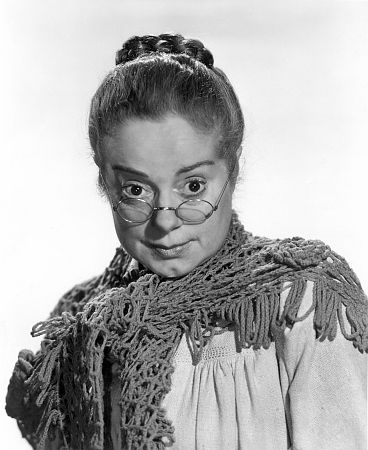
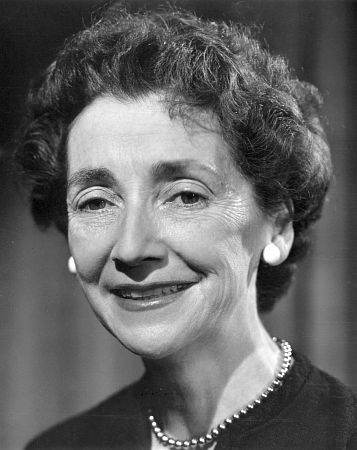
Ruth Gordon’s Oscar journey—filled with nominations and victories—is proof of her tenacity and creative talent. In honor of Ruth Gordon’s Oscar nominations, this piece examines the highs and lows of her extraordinary career and how she had a lasting impression on Hollywood.
Early life and career beginnings
In the year 1896, Ruth Gordon was born in Quincy, Massachusetts. She showed an interest in performing arts from an early age. Her passion for performing brought her to the American Academy of Dramatic Arts, where she received training for the stage. Gordon had a lot of obstacles to overcome in her early career. Young, gorgeous starlets ruled Hollywood in the 1920s and 1930s, and Gordon’s unusual appearance and humorous demeanor frequently restricted her possibilities. She persisted nevertheless, bouncing between Hollywood and Broadway and gradually establishing herself as a gifted performer.
She achieved much of her early professional success on stage, where she was a natural in dramatic and humorous parts. Although Gordon had a platform to showcase her variety as an actor thanks to her experience in theatre, it would take some time for Hollywood to completely recognize her skill.
Ruth Gordon’s first Oscar nomination: “A Double Life” (1947)
Ruth Gordon had made cinematic appearances early in her career, but it was as a screenwriter—rather than an actress—that she received her first substantial accolade. She collaborated with her husband, Garson Kanin, to write the script for A Double Life (1947). George Cukor helmed the emotional thriller about an actor who becomes detached from reality while playing Othello. Gordon’s first taste of Oscar success came in 1948 when he and Kanin’s screenplay was selected for an Academy Award for Best Original Screenplay.
Gordon’s success in the future was made possible by the nomination, even if they did not win that year. Her career would revolve around writing with her husband, and in the years to follow, their joint efforts would earn her more Oscar acclaim.
“Adam’s Rib” and “Pat and Mike”: More nominations as a screenwriter
Following their initial nomination, Gordon and Kanin collaborated once more to write two more classic films that brought them both praise from critics and an Oscar nomination. The first of these was the legendary battle-of-the-sexes comedy Adam’s Rib (1949), starring Katharine Hepburn and Spencer Tracy. The movie was a big smash and is now regarded as one of the greatest displays of Hepburn and Tracy’s on-screen chemistry. Gordon and Kanin received another nomination for the 1950 Academy Awards’ Best Original Screenplay category.
Pat and Mike (1952), their second significant joint project, starred Tracy and Hepburn as well. Similar to Adam’s Rib, the movie, which centered on a female athlete and her mentor, was a critical and economic triumph. Gordon’s status as a master of clever, perceptive writing was cemented with Pat and Mike, despite the film’s screenplay failing to get an Oscar nomination.
Ruth Gordon’s acting triumph: “Rosemary’s Baby” (1968)
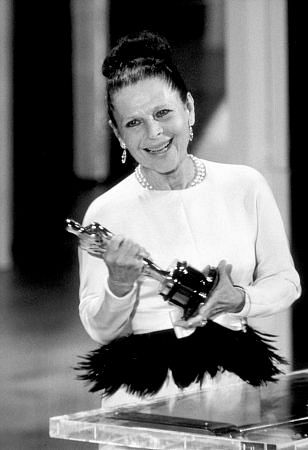
Ruth Gordon’s most famous Oscar moment, notwithstanding her accomplishment as a screenwriter, was in 1969 when she took home the Best Supporting Actress trophy for her performance in Rosemary’s Baby (1968). Roman Polanski, the director, told the spine-tingling horror tale of a young lady who thinks she is bearing Satan’s kid. Gordon embodied the sly and inquisitive neighbor Minnie Castevet with the ideal mix of humor and menace. Her portrayal in the movie received a lot of attention, and it’s still one of her most remembered parts.
Gordon’s remarks at her Oscar acceptance speech were just as remarkable as her acting. With a witty and modest remark, “I can’t tell you how motivating a thing like this is,” she won over the crowd. Gordon, who was 72 years old, had at last won an Oscar for his acting, demonstrating that skill and hard work can pay off at a later age.
Later career and final Oscar nomination: “Inside Daisy Clover” (1965)
Gordon’s Academy Award career continued after she won for Rosemary’s Baby. She was a nominee for Best Supporting Actress in Inside Daisy Clover (1965) before her victory. She played the quirky mother of Natalie Wood’s character, a budding movie star, in this movie. Despite not winning the Oscar that year, Gordon’s candidacy proved once more that she was a formidable presence in Hollywood, both in front of and behind the camera.
Gordon’s ability to excel in comedies as well as tragedies was demonstrated by her flexibility in characters such as Mrs. Clover and Minnie Castevet, which won her praise from both reviewers and fans. Her work became known for its ability to seamlessly transition between these two approaches while consistently giving her characters nuance and humour.
A lasting impact
Ruth Gordon’s trip to the Oscars is a reflection of the highs and lows of a lengthy Hollywood career. She became a cherished figure in the world of media because of her perseverance, adaptability, and indisputable skill. Gordon had a lasting impression on the movie industry as a leading woman, supporting actor, and scriptwriter.
Her ultimate triumph for Rosemary’s Baby and her Oscar nominations serve as a reminder that hard work and devotion may pay off even though success isn’t always instantaneous. Ruth Gordon is still an inspiration to see, showing what can be achieved in a lifetime devoted to the art of storytelling.
You may also like these articles
Best movies of Gwyneth Paltrow
Best-selling movies of Henry Golding