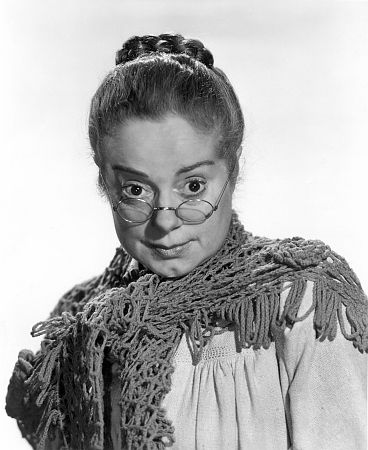
Elsa Lanchester has left her mark on film history as a name that is linked with adaptability and unique character work. Despite being well-known for playing the Bride of Frankenstein, Lanchester’s career went well beyond the beloved science fiction character. Her status in Hollywood was cemented by her extraordinary talent for bringing quirky personalities to life. She was nominated for many Oscars. This piece dives into Lanchester’s two Oscar-nominated outcomes, analyzing the parts that won her praise from critics and investigating the elements that led to her continuing impact on cinema.
The origins of a character actress
Elsa Lanchester was surrounded by the arts and was born in London in 1902. Under the tutelage of renowned dance instructor Isadora Duncan, she shifted her focus to performing and made her theatrical debut in the 1920s. Early exposure to experimental drama helped Lanchester hone her sense of the quirky and dramatic—qualities that would come to characterize her work in both American and British film. Her ability to play unique, unorthodox characters, both comedic and serious, allowed her to stand out in an age where leading women were more concerned with appearance.
The magic of “Come to the Stable” (1949)
The film centers on two French nuns, portrayed by Loretta Young and Celeste Holm, who come to the city with the audacious plan to construct a hospital for children. Amelia Potts, an eccentric painter and landlord who initially opposes their ambitions, was portrayed by Lanchester.
The way that Lanchester managed to balance humorous relief with emotional complexity in Amelia Potts’s depiction was particularly noteworthy. Although Lanchester gave her a tough exterior, as the narrative went on, she began to show signs of warmth. Despite the possibility of playing the part as just a counterpoint to the pious nuns, Lanchester added nuance to the portrayal, making Amelia a fully realized person.
Crafting tone in “Witness for the Prosecution” (1957)
In this film, Lanchester depicted Miss Plimsoll, the nurse tasked with treatment to Sir Wilfrid Robarts (Laughton), a heart attack victim who finds himself embroiled in a convoluted murder case. Miss Plimsoll is the odd opponent of Sir Wilfrid’s unwavering pursuit of justice since she is entrusted with making sure he takes his rest seriously. The perfect balance of dramatic tension and humorous timing was achieved by Lanchester’s rendition. Her skill in balancing her character’s constant fussiness with the darker, more scary parts of the movie brought lightness without diluting the gravity of the story.
Eccentric characters as a trademark
Elsa Lanchester’s ability to elevate supporting parts into moments that steal the show is what sets her Oscar-nominated roles apart. Even though Lanchester didn’t portray the main character, her characters frequently ended up being the focal point of the story. Come to the Stable’s eccentric Amelia Potts served as the narrative’s moral core until she finally warmed up to the nuns’ cause. Miss Plimsoll provided humorous relief and a sense of reason in Witness for the Prosecution, bringing some humanity to the legal drama.
The power of subtlety
At a period when many actresses were renowned for their exaggerated personalities, Elsa Lanchester was a master of nuance. Her two Oscar-nominated performances demonstrate her ability to communicate nuance and passion without using ostentatious theatricality. Her slow transition from apathy to empathy as Amelia Potts was performed with a controlled reserve that seemed completely real. Similarly, Miss Plimsoll’s transformation from a stern carer to an emotionally committed character was skilfully nuanced in Witness for the Prosecution.
Collaboration with Charles Laughton
Talking about Elsa Lanchester’s career would be incomplete without bringing about her union with fellow actor Charles Laughton. The pair frequently worked together professionally after getting married in 1929. Witness for the Prosecution, their most well-known collaboration, demonstrated their on-screen chemistry. A dynamic that improved both shows was created by the striking contrast between Lanchester’s prim and proper Miss Plimsoll and Laughton’s commanding authority as Sir Wilfrid.
Mutual respect served as the foundation of their relationship, and Lanchester frequently acknowledged that Laughton inspired her to take on more difficult parts. While they collaborated on several films, Witness for the Prosecution stands out as their most famous project since both actors gave performances deserving of an Oscar.
Impact on modern cinema
Elsa Lanchester did not get an Academy Award, but her nominations demonstrate her extraordinary ability and impact. Lanchester broke the mold in an industry that frequently disregarded character actors in favor of glitzy leading ladies. She opened doors for actors in the future who want to escape the confines of traditional roles. Following in her footsteps, actresses such as Maggie Smith and Judi Dench have embraced odd, unusual parts that call for nuance and a spectrum of emotions.
You may also like these articles
How did Jason Statham become famous?
How did Angela Bassett became famous
How did Laurence Fishburne become famous?